ABOUT MARK
With me you are not just moving their feet – you are moving their mind.
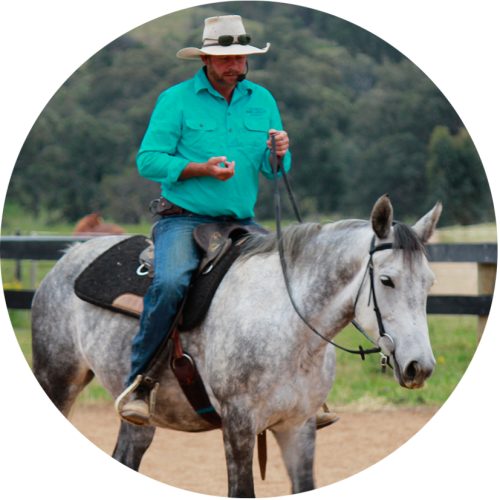
Horseman Mark Langley
Helping horses learn is central to my philosophy—not just to improve performance, but to build their confidence in themselves, in people, and in the guidance they’re given.
Across breeds and disciplines, many horses carry worry and emotional tension that affects their performance and weakens the connection with their handler.
Often, this stems from how education has been presented to them.
How your
horse learns
matters
Training that supports every horse
and every person
Balance
Addressing problems definitively involves creating emotional and physical balance.
Empowering Horses
Learn how to help your horse gain in confidence; to search; and to have desire.

Over 40 yrs of experience
The well-being of your horse is at heart of everything I teach.
Without understanding and gaining a horse’s focus, their tension levels constantly go up and down. Our guiding aids become unwelcome interruptions.
-
Helping people to understand how to read and train their horse better
-
Reduce anxiety and brace
-
Guide calm focus
-
Open-up shut down horses
-
Improve connection
“Mark’s ability to observe what’s needed and skill to impart his knowledge and experience is exceptional.
Mark is the first one I’ve seen who offers something original in over 40 years.
Best yet: it works.”
– Judy
See the Softness.
Join Mark's Online Membership: 7 day free trial
How my Horsemanship offers a Fresh Perspective
I teach people to train their horse in a way that improves softness
My teaching allows horses to have the room to search and make decisions for themselves so that when their horses are operating, they are focused on what they are doing, they become naturally softer and more balanced.
Too often, horses are trained to move away from energy/ stimulant (creating a negative feeling) when they should be going towards focus/ intention.
I teaching people to become better leaders for their horses
When we take a horse away from their herd, or their comfortable environment, we have to replace that herd/ stability/ comfort and that comes from the quality of our leadership and the confidence that our horses put in us. If we can’t provide that quality leadership, then we can’t gain a horse’s soft focus and make it feel better when the environment is quite challenging.
Leadership comes from being calm and centred and offering a horse clarity. So instead of teaching people to be leaders like an alpha horse or bossy; I like to teach them to be a place where their horse can feel safe and relax.
I understand different methods used & why they don’t work for a horse
Over the past 15 years of being a professional horse trainer, I have trained and started thousands of horses. I have been lucky enough to have been sent many wild horses from all parts of Australia; as well as many Arabian horses, a lot of which were un-handled 6-8 year old’s. Working with these sensitive, hotter bred horses, taught me very quickly what methods were and were not working. I had to be more accurate in my application; some things just didn’t make the horses feel good and other things clearly did.
Their attention to detail taught me how much attention to detail I needed and how the small things in foundation, had to be dealt with and nurtured in the right way so that they could progressively develop without carrying emotional baggage that eventually comes out to cause bigger problems.
I have thrown away learned methods to take on a general philosophy that allows me to bend, mould and address every moment of what is happening as oppose to getting something done.
These professional years have been filled with training, re-educating and helping troubled horses. Competition hasn’t been a part of who I am. For this I am grateful for, as it has made me hone in and address each horse’s real troubles and needs – not necessarily the needs of ego and winning. So, to gain a good manoeuvre, I address the path to that manoeuvre from the very start.
Where I teach
I now travel mostly throughout Australia (NSW, ACT, WA, QLD, VIC, SA) and have taught in Germany, England, Sweden, Finland and America. I work with people and horses on an individual level to help people understand themselves and their horses better so that they can provide a learning environment that promotes calmness, confidence and focus.
I help people from beginners to people who lack confidence, to confident people in performance.
I train by directing a horse’s thought and calm focus
At my clinics or through the Mark Langley Horsemanship Videos, people learn about horses and how to teach them effectively. When I see people lunging a horse or tying a horse up for bad behaviour, I ask, is that educating the horse? No it’s not. There is no point simply moving a horse’s body around – instead horsemanship should be about engaging with a horse emotionally. I work with gaining a horse’s awareness and getting them to go towards their thoughts.
I create a space which offers clarity, comfort, and connection.
To do this, we need to reduce anxiety and fears and improve confidence and understanding (both in horses and humans).
Who have I learned from? Horses.
There are other trainers whose philosophies have helped me shape my own ideas and my confidence in where I was going and what I was doing (Mark Rashid, Harry Whitney and Ross Jacobs). I have never been the student of any trainer.
The way that I work and my technique is guided by my own unique experiences of teaching and training horses.
Help horses learn.
Education should help a horse
feel better
feel better

Online Membership
Transfer tension into softness & uncertainty intopartnership
YOUR HORSE WILL THANK YOU FOR IT
Detailed insights, courses, training videos
+800 training videos
+ my Personal Support included